
Pinellas 24-Hour Release Source
There is no separate official PCSO rolling 24-hour release list. The Pinellas County Sheriff's Office Arrest Inquiry combines people now in the jail with people released during the prior 30 days. It is a person and booking search, not a full census of everyone who left during one day. That difference is vital. The form accepts a booking date, but booking date is not release date. Someone booked days earlier and released today could be missed if the search is limited to today's bookings.
The inquiry can be searched by a name, docket number, or booking date. Extra inputs include first name, race and sex, plus options involving aliases or charges. Use broad spelling first. Then narrow the result with a docket or booking detail. If the purpose is to find one named person rather than review same-day events, the Pinellas County released-inmate search path explains how to follow county, state, federal, and court records without mixing them.
Check Pinellas Releases Today
A true same-day check starts with a known identity or booking episode. Record the time of the check in Eastern Time so the 24-hour boundary is clear. PCSO does not state a guaranteed refresh interval, and its information may change as records are processed. The release timestamp on the detail, not the booking-date filter or a projected date, determines whether that booking falls inside the chosen period.
- Open the official PCSO Arrest Inquiry and search by docket number when known. Otherwise, start with last name and first name.
- Match the person with another identifier, such as booking date, docket, case number, alias, sex, or race. Never merge same-name records.
- Open the correct booking episode. A person may have more than one, so do not assume the newest name result is the relevant stay.
- Read Cell Location/Status for the actual release timestamp and wording. Compare that timestamp with the exact time the 24-hour check began.
- Read the mechanism. Surety bond or a court-authorized release differs from release to another county, FDC, USMS, or ICE.
- Recheck later or request the release record when a new event has not posted, the status is abbreviated, or the destination is unclear.
The official PCSO screen makes the 30-day scope and search inputs visible. Review the sheriff's recent-person inquiry source before relying on a same-day result.
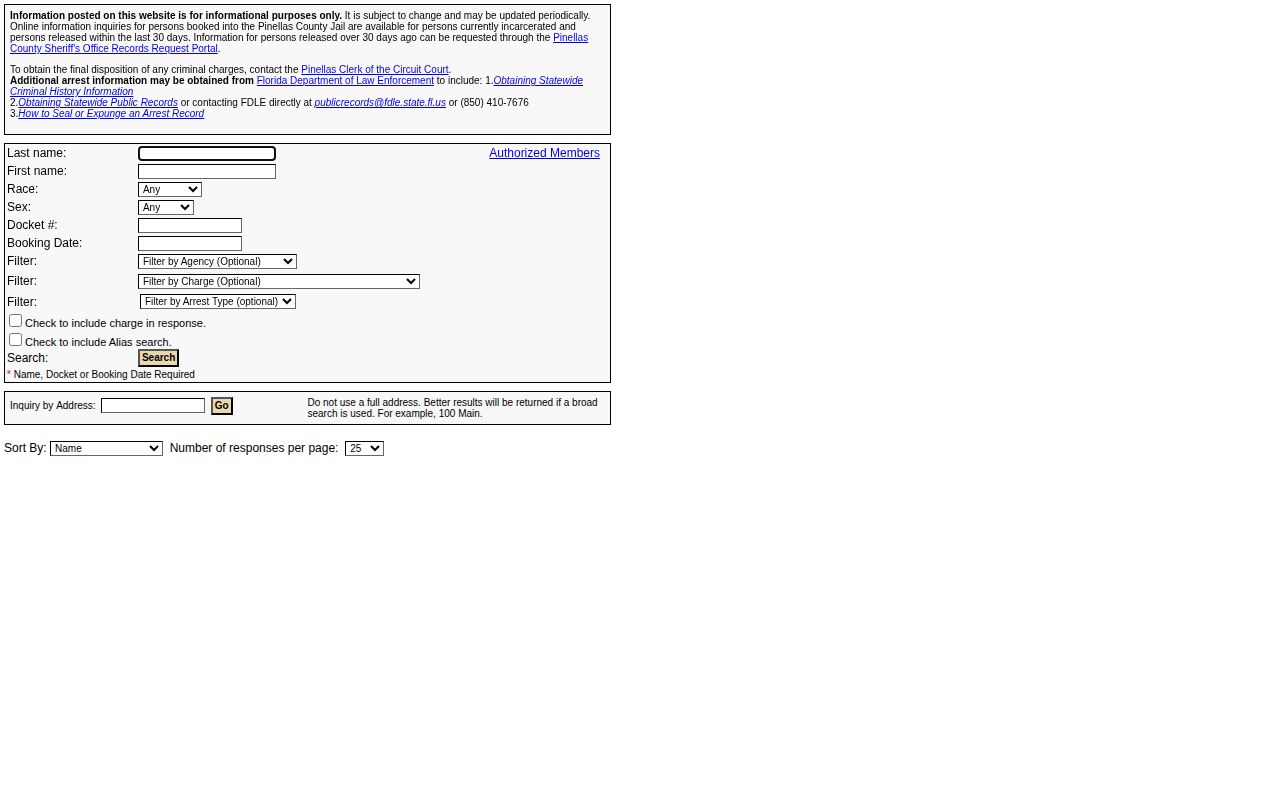
The image shows why the tool can verify a known recent booking but cannot be treated as an official all-person 24-hour feed.
Note: Save the exact status wording and check time because the inquiry can update while release paperwork clears.
Pinellas 24-Hour Release Fields
A recent booking detail carries more information than a name list. Some fields identify the person. Others describe charges or the booking episode. Only the actual status and release time establish that PCSO's custody episode ended. The projected release field answers a different question and can read “NONE” even when the status already records a bond release or transfer.
| Field | What it shows |
|---|---|
| Name, aliases, and SPIN | Identity clues that must be paired with a second identifier. |
| Docket and booking date | The exact Pinellas jail episode being reviewed. |
| Cell Location/Status | The agency-posted release time and mechanism, or an active custody status. |
| Proj Release Date | A forecast field that may be blank or “NONE”; it is not proof of an actual exit. |
| Charge, bond, and case data | Why release may have occurred and which Clerk case should be checked. |
| Booking image | A photo tied to that booking, not proof of present custody or case outcome. |
| Release or receiving authority | Whether the person left for the community or remained in custody elsewhere. |
A surety-bond status supports a community release from that booking. “Released to other county,” a federal hold, or an ICE transfer means PCSO custody ended but confinement may continue. If the entry points to state prison, use the Florida Department of Corrections search. If it points to a case order, use the Pinellas Clerk docket for the legal result.
When Pinellas Releases Are Processed
PCSO publishes a release process, not a fixed gate time. The Pinellas inmate handbook says a person called from an assigned unit gathers personal and jail-issued belongings, moves through dress-out, receives property, and receives money at a separate point. These steps occur after the legal basis for release exists. They help explain why a court ruling and the physical release timestamp can fall on different sides of a 24-hour cutoff.
A judge's release order does not bypass records review. The person may return to an assigned unit while Inmate Records clears paperwork, other cases, and holds. PCSO warns that this can take several hours. Eligible courtroom release also depends on a completed application and clearance. A person still in jail clothing goes through the normal process. There is no researched basis for promising release at a set hour, so family pickup plans should follow the posted custody status rather than an estimate.
Note: A court order may come first, while the PCSO release timestamp follows after records checks and physical processing.
Transit After a Pinellas Release
The jail and Justice Center share the 49th Street North corridor. Public transit can matter when a release posts without a planned ride. PSTA Route 49 lists a timepoint at 49th Street North and 140th Avenue North, near the jail at 14400 49th Street North. It is a public route, not transport furnished by the jail. Service times, stop locations, and conditions can change, so the live PSTA timetable should be checked before anyone relies on it.
The current PSTA Route 49 page provides the source for that local option.
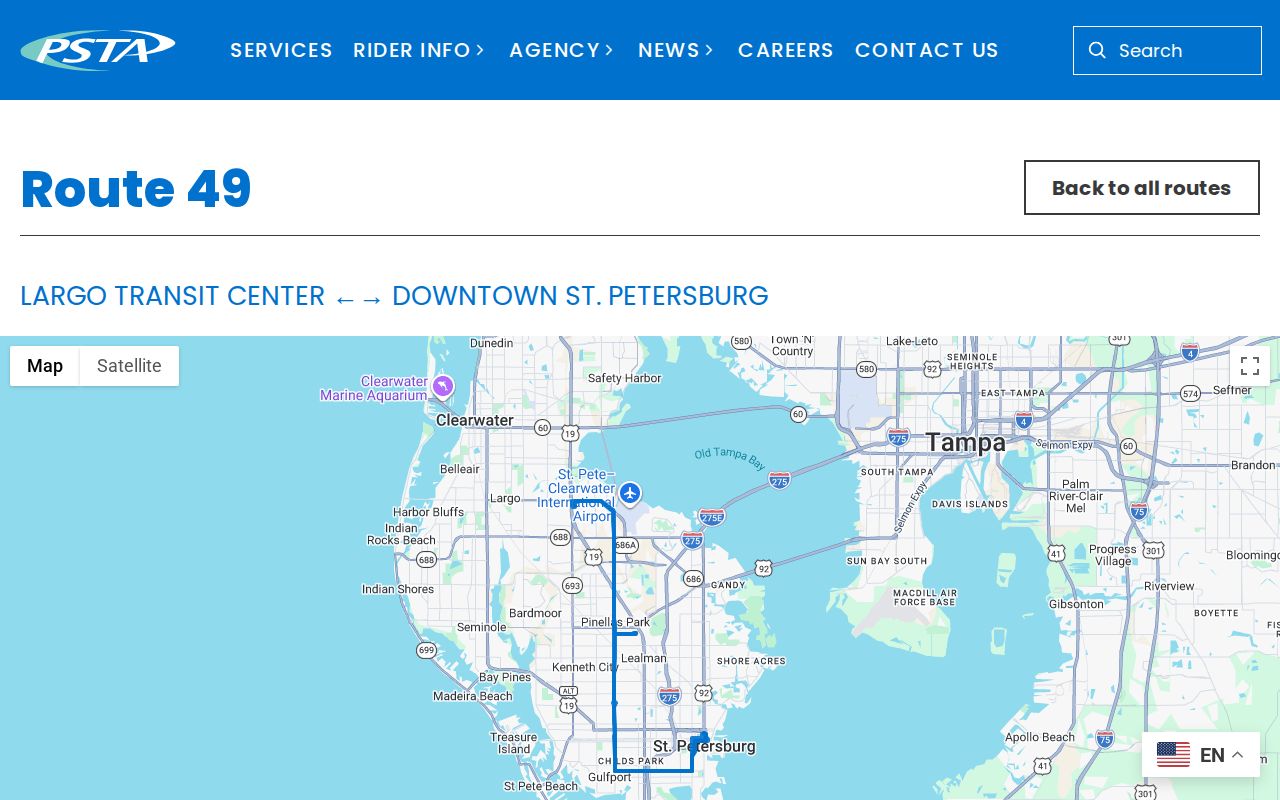
The route information helps with a practical next step, but it does not confirm that a person has cleared Pinellas County Jail.
Pinellas 24-Hour Bond Releases
Bond can explain a same-day exit, yet payment alone does not prove one. PCSO's handbook describes surety and cash methods and an AllPaid card option online, by phone, or at the jail bond counter. Card bonds are allowed up to $2,500 per charge and carry a nonrefundable vendor service fee. The Sixth Judicial Circuit bond schedule guides law enforcement, but it does not bind a judge. Some charge types require first appearance.
The controlling evidence remains the PCSO release status plus the court record. A pretrial release means the person left the jail while the case remains open. It is not a sentence completion or dismissal. Local Pre-Trial Services may add check-in terms. The detail should therefore be read in this order: actual release timestamp, mechanism, case number, then the Clerk's release order or docket. Bond assessed or bond due fields by themselves do not establish that release took place.
Pinellas Release Archive Quirk
Pinellas has a 30-day released-person archive without distinct 24-hour and 72-hour feeds. That design is useful for verifying a known recent booking, but it cannot produce a complete same-day list by choosing a booking date. The archive also mixes active custody and released records. Each result must be opened and its status read. No verified PCSO jail-search mobile app supplies a missing daily feed. SmartInmate handles communications and personal downloads, while the FDLE app serves other state data.
Once the web window closes, PCSO directs requests to its GovQA Records Portal. A focused request should name the person, docket, date range, booking episode, exact release date and time, release type, authorization, and receiving agency if relevant. Ask for a booking photo only if it is needed as a separate record. PCSO provides an estimate when charges apply and does not publish a fixed price or turnaround for that package.
Pinellas Release or Transfer
“Released” is agency-specific. A community release after bond, recognizance, sentence completion, or another court clearance differs from a transfer. An FDC, USMS, ICE, or other-county destination means the Pinellas episode ended while another custody episode began. A released person may also remain on probation, parole, community control, or another form of supervision.
- Still in PCSO custody
- The current booking status remains active at the Pinellas County Jail.
- Community release
- The status records an exit such as bond or court-authorized release, subject to any stated conditions.
- Transfer
- PCSO custody ends, but the receiving agency becomes the next place to verify.
- Discharge
- A custodial or supervision term ends in the system that imposed it; it does not erase the court case.
For a broader three-day check, the Pinellas County 72-Hour Release List explains how to set and document a longer manual window. It can catch events missed by a same-day review, but it uses the same official 30-day inquiry rather than a separate sheriff feed.